Judit Adamski
- EN
- PL
Visual artist. Born in Krakow in 1992. She comes from a transnational family. She attended the Academy of Fine Arts in Krakow, but immediately before graduating, she resigned from the university for what she says were mental health reasons – she experienced mobbing by some of the professors. She decided not to continue her academic career and chose her own independent path. Her believes that a person is defined not by titles, but by his or her own achievements.
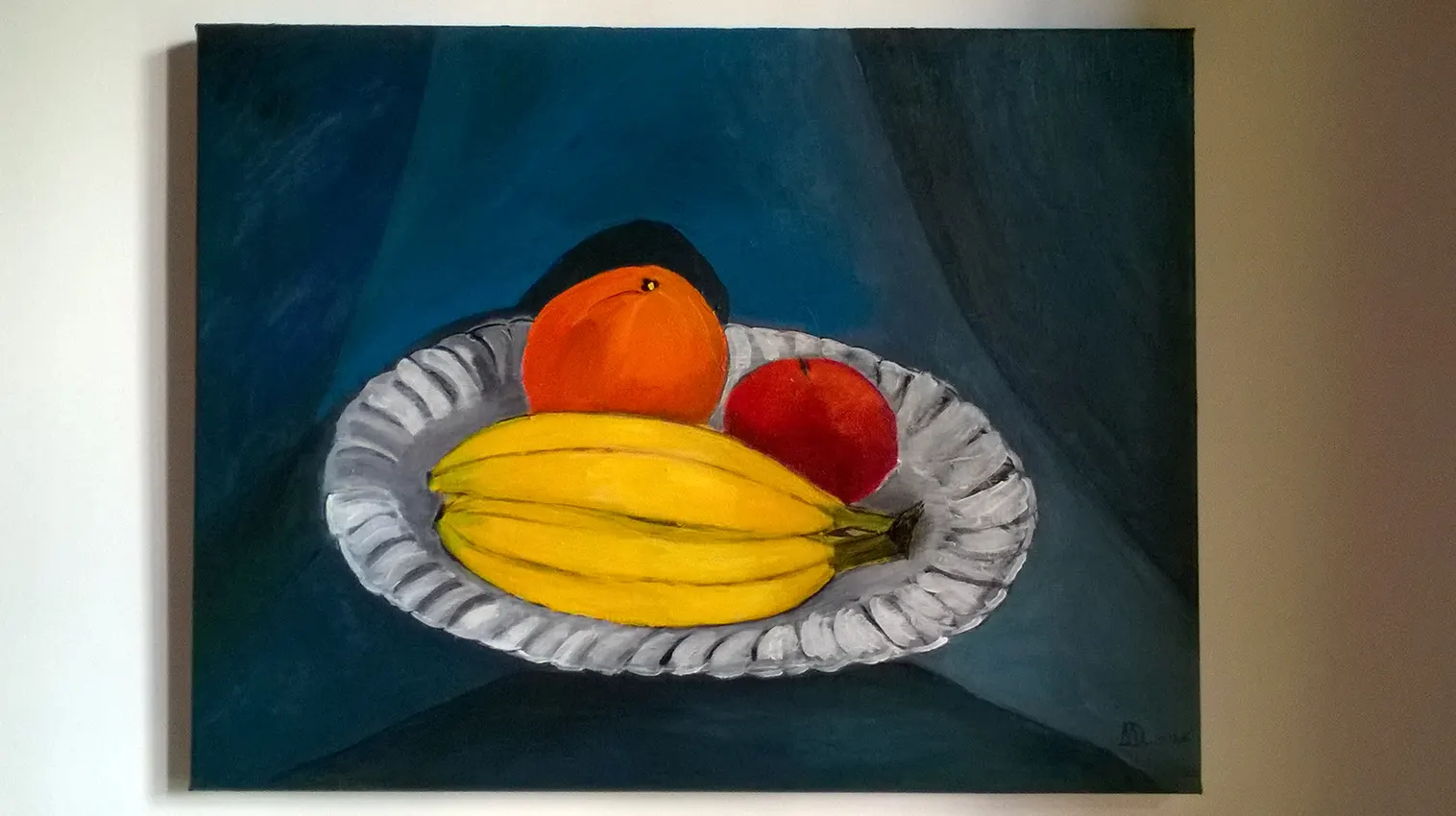
In her work, she uses painting, in which she plays with the tradition of this medium. She consciously places herself in the assessment of the inept epigone of great predecessors, and creates her own interpretation of modernity.
„A Man’s Head Among the Grapes” (2016) – refers to a motif taken from the biblical Book of Judith, in which Judith, wanting to save her nation, cunningly goes to the enemy king and beheads him. It was a common theme, of the work of old Baroque and Renaissance masters, such as Lucas Cranach the Elder, Artemisia Gentileschi, Caravaggio, Rubens and others.
The popularity of this scene, as well as the emotional connection between the authors of the paintings and history itself, remains a mystery to this day.
How does Artemisia Gentileschi – who was the author of the largest number of paintings whose subject was Judith beheading King Holofernes, understand the role of Judith? And how do other painters understand this scene? Who is Judith? What does she represent? What emotions does the biblical figure of Judith evoke to this day?
“The Oval Portrait of an Enlightened Count” (2023) – refers to the novella The Oval Portrait by Edgar Allan Poe, which tells the story of some artist who while portraying his wife, and fell in love with the picture he painted so much, that he did not notice, that the woman he was painting was already dead. Poe’s work draws attention to the intricate relationship between art and life.
At that time, interpreters of Poe’s poetry suggested that it is the woman’s beauty that condemns her to death, and not the introversion of the artist himself.
Adamski switches the roles. The portrayed man becomes the victim of the artist who portrays him, who fell in love with the picture she was painting.
Judit Adamski lives and works in Poland (Kraków) and Mozambique (Maputo).
Artystka wizualna. Urodzona w Krakowie w roku 1992. Pochodzi z rodziny transnarodowej. Uczęszczała na Akademię Sztuk Pięknych w Krakowie, lecz zaraz przed dyplomem zrezygnowała z uczelni, z powodów, jak sama podaje, zdrowia psychicznego – doświadczyła mobbingu przez niektóre osoby z kadry profesorskiej. Postanowiła nie kontynuować akademickiej kariery, wybrała własną niezależną drogę. Wyznaje przekonanie, że nie tytuły świadczą o człowieku lecz jego własne dokonania.
W swojej twórczości posługuje się malarstwem, w którym igra z tradycją tego medium. Sytuuje się świadomie w ocenie nieudolnej epigonki wielkich poprzedników i poprzedniczek, tworząc przy tym swoją własną interpretację nowoczesności.
„Głowa mężczyzny wśród winogron” (2016) – nawiązuje do motywu zaczerpniętego z biblijnej Księgi Judyty, w której to Judyta chcąc ratować swój naród, w sposób przebiegły udaje się do wrogiego króla i ścina mu głowę. Temat często wykorzystywany przez renesansowych i barokowych mistrzów między innymi takich jak Lucas Cranach starszy, Artemisia Gentileschi, Caravaggio, Rubens i inni. Do dziś zastanawia popularność tej sceny, jak i emocjonalny związek pomiędzy autorami obrazów a samą historią.
Jak rozumie rolę Judyty Artemisia Gentileschi – autorka największej liczby obrazów, których tematem była właśnie Judyta odcinająca głowę królowi Holofernesowi? Jak rozumieją tę scenę pozostali malarze? Kim jest Judyta? Co sobą reprezentuje i jakie emocje do dziś wzbudza?
„Owalny Portret oświeconego hrabiego” (2023) – nawiązuje do noweli Edgara Allana Poego The Oval Portrait, która opowiada historię pewnego artysty, który portretując swoją żonę, tak zakochał się w swym obrazie, że nie zwrócił uwagi, że kobieta, którą malował jest już martwa. Dzieło Poego, zwraca uwagę na zawiły związek pomiędzy sztuką a życiem. W ówczesnych latach interpretatorzy poezji Poego sugerowali, iż to piękno kobiety skazuje ją na śmierć, a nie introwertyzm samego artysty. Adamski podmienia role. To mężczyzna staje się ofiarą portretującej go i zakochanej w swym obrazie artystki.
Judit Adamski mieszka i pracuje w Polsce (Kraków) i Mozambiku (Maputo).
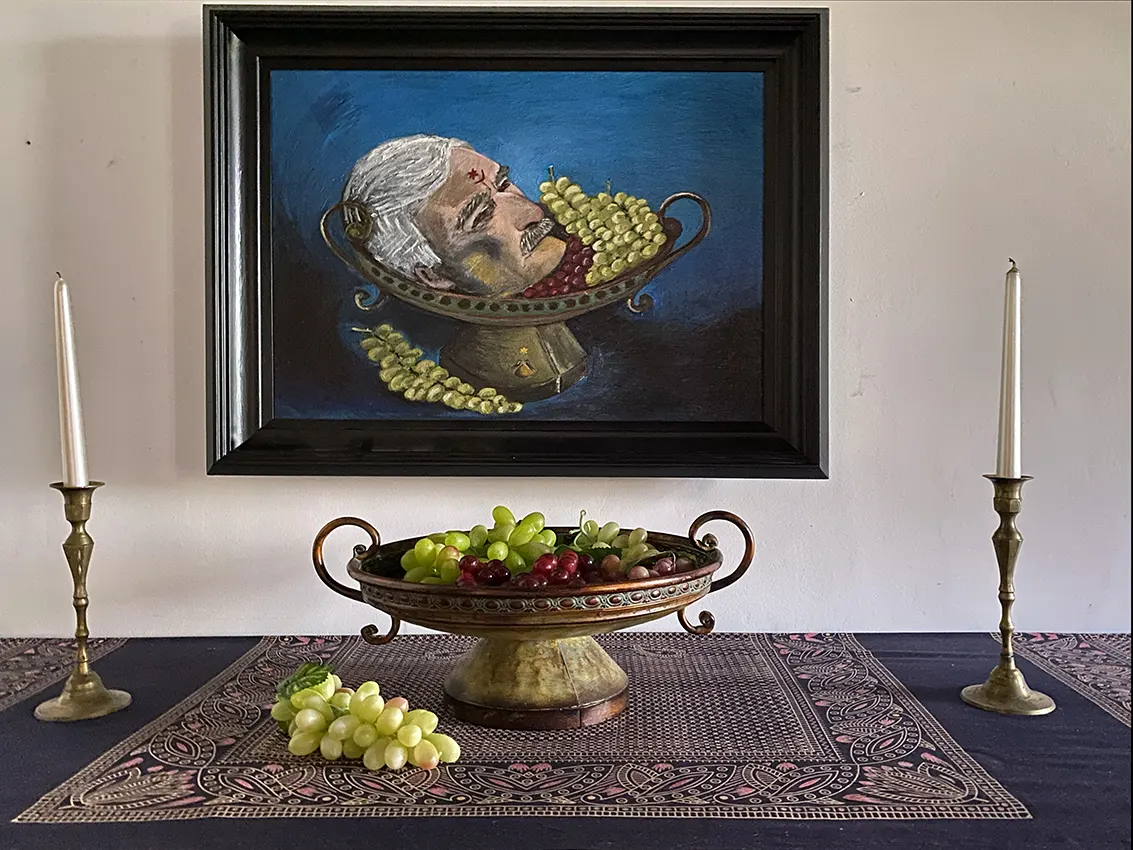
Man’s Head Among the Grapes / Głowa mężczyzny wśród winogron, 2016
Acrylic on canvas / Akryl na płótnie, 60 cm x 45 cm
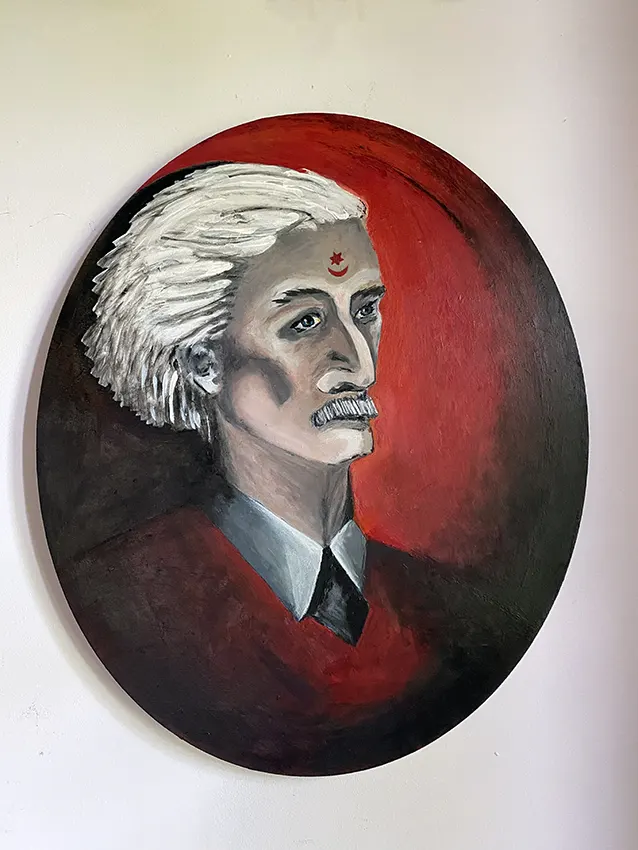
The Oval Portrait of an Enlightened Count / Owalny Portret oświeconego hrabiego, 2023
Oil on Canvas / Olej na płótnie, 60 cm x 40 cm